Playa del Carmen Bull Shark Dive: Up-Close Encounters, Conservation, & Controversy

Every winter, divers flock to the Mexican Caribbean, and it’s not just to escape the winter weather.
From November to March, female bull sharks gather near the port of Playa del Carmen, Quintana Roo, to rest & gestate.
This creates ideal conditions for divers to get an up-close experience with the sharks. They are in a predictable area, for an extended period of time, and easily accessle from shore.
The Playa del Carmen Shark Dive is a form of ocean tourism that gives divers an up-close experience with the bull sharks. Some shops feed the sharks, while others offer observation-only dives.
Raising the question, is there a responsible way to interact with these bull sharks? Is it acceptable to feed them in these conditions, for the sake of tourism?
This post explores the pros and cons of the Playa del Carmen Shark dive, so you can decide for yourself whether it aligns with your values as a traveller and diver.
What is the Playa del Carmen Shark Dive?
The Playa del Carmen shark dive is a controlled, usually baited dive conducted offshore in a sandy area off the coast of Quintana Roo. It’s considered an advanced dive, as the site is at 24m (80 feet).
As far as shark dives in the world go, the Playa del Carmen Shark Dive is uniquely managed. Saving our Sharks is a community collective of the local government, tour operators, dive shops, and community members work together to organize and train dive guides each season.
They set out strict guidelines for shark interactions, group management, feeding times & amounts, and which dive shops can participate. They also host specialized training for local dive guides that is required for anyone bringing clients to the shark dive.
Shark dives are conducted at one dive site, with strict dive times and is keenly monitored by observed by the the Savin Our Sharks organization. Violations of protocols are fined.

How the Feeding Dives Work
The Playa del Carmen Shark Dive is a boat dive. Captains navigate to an area called Shark’s Point, moor to the line, and then the divers enter the water after the guide.
Shark Point is subject to strong currents, so divers must hold the line at all times. There is a continuous line from the boat to the mooring ball, the mooring line, and then a line that runs from the base of the moor across the sea floor.
This dive is carefully scheduled & monitored, with strict fines for the operators if procedures are broken. Here are some logistics of a typical feeding dive in Playa del Carmen.
Dive Logistics
🤿Dive Professionals: a feeder, a safety, and at least 1 dive guide
🫧Up to 6 recreational divers
⏱️ Strict dive start time (time you enter the water)
⏳ Max 30 min bottom time
🐟 Feeding amounts are limited. Fish is cut into small pieces and hand fed to each shark, ensuirng they all get a piece!
📷Divers can take a camera, with some restrictions
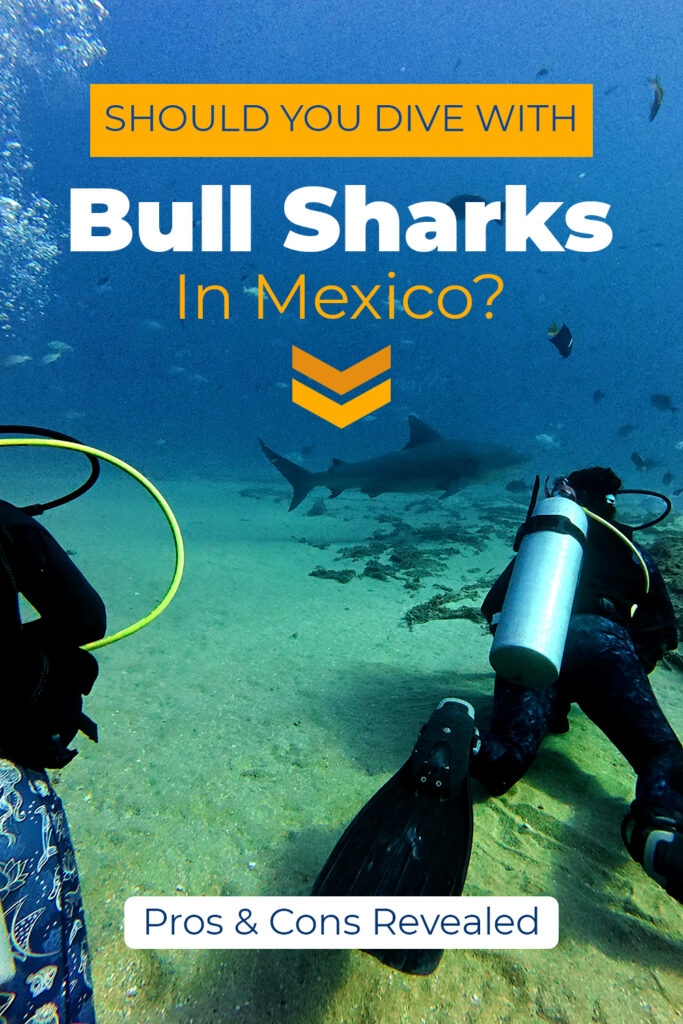
The dive guide will be positioned behind the divers, monitoring the sharks. The feeder is in front of the divers, and the safety on the other side of them, watching their blind spot. The feeder and safety diver will wear chainmail, but everyone else will be in standard dive gear.
As a diver, you’ll want to be overweighted slightly to help stay stationary (~2k/4lb). This will help you relax on the bottom and home the line so you can focus on the sharks!
The dive ends when one of the following happens:
- Divers reach their NDL (it’s a deep dive)
- Someone in the group gets low on aira
- or the time limit of 30 minutes is reached
At this point, the feeder will send the food to the surface with a buoy for the boat to collect. Then the feeder will signal when it is safe for the group to ascend.
Your dive guide will signal you to ascend, and your group will let go of the line and begin to surface while following the current. You’ll drift, complete your safety stop, then meet at the surface and the boat will pick you up.
These dives are highly regulated compared to many shark encounters worldwide, with the mission to preserve & protect the sharks as much as possible. You will not find a dive as structured elsewhere in the world!
Positives of the Playa del Carmen Shark Dive
Compared to unregulated feeding dives elsewhere, Playa del Carmen’s bull shark dives operate under clear rules and consistency. Sharks are fed just enough to keep them interested, not to diminish the need to hunt. Divers are closely monitored and do not chase or touch animals. The dive positioning is also designed to reduce stress and unpredictability.
Consistency matters. Sharks learn patterns, and predictable, calm conditions are generally considered less disruptive than chaotic or poorly controlled interactions. Saving our Sharks has been operating with their Manual of Good Practices in a similar manner since 2024 with an excellent record.

Photo: Shannan
Sharks are worth more alive than dead
Sharks are crucial to our ecosystems, and their numbers are diminishing worldwide at a rate faster than they can replenish. We need to change perceptions on sharks, and we need to do it now.
By promoting shark tourism, we are convincing the general public that sharks are more valuable alive than sold at market.
You can “sell” the same shark over and over on a tourism experience, vs. once for its meat and fins.
One of the strongest arguments in favour of shark tourism is economic. Shark dives generate income for:
- Local dive operators
- Boat crews and instructors
- Hotels, restaurants, and other tourism businesses
In regions where sharks are historically targeted for fishing or culled due to fear of attacks to swimmers, tourism can shift incentives away from exploitation and toward protection. A living shark seen by hundreds of divers each season becomes far more valuable than a dead one sold once.
Changing perceptions through experience
For many divers, this is their first close encounter with a large shark. Seeing bull sharks calmly cruising rather than behaving aggressively can fundamentally change how people feel about sharks.
Have you ever seen a shark in real life? The way they move is mesmerizing. I remember my first interaction with a hammerhead. I was hypnotized by its movements. Seeing sharks up close allows fear to be replaced with:
- Wonder
- Respect
- Curiosity
- A desire to protect
That shift in mindset matters. Conservation does not start with policy, it starts with perception. We have to make people care about sharks.
Boosting Local Economies
Especially in the case of Playa del Carmen, all the profits from the bull shark dive are going to stay in the community. Everyone gets a commission. The dive shops, local government, fishermen, etc.
When sharks are fished, apart from a small percentage done by locals its usually large companies and trollers. That money almost never stays in the place the sharks are taken from.
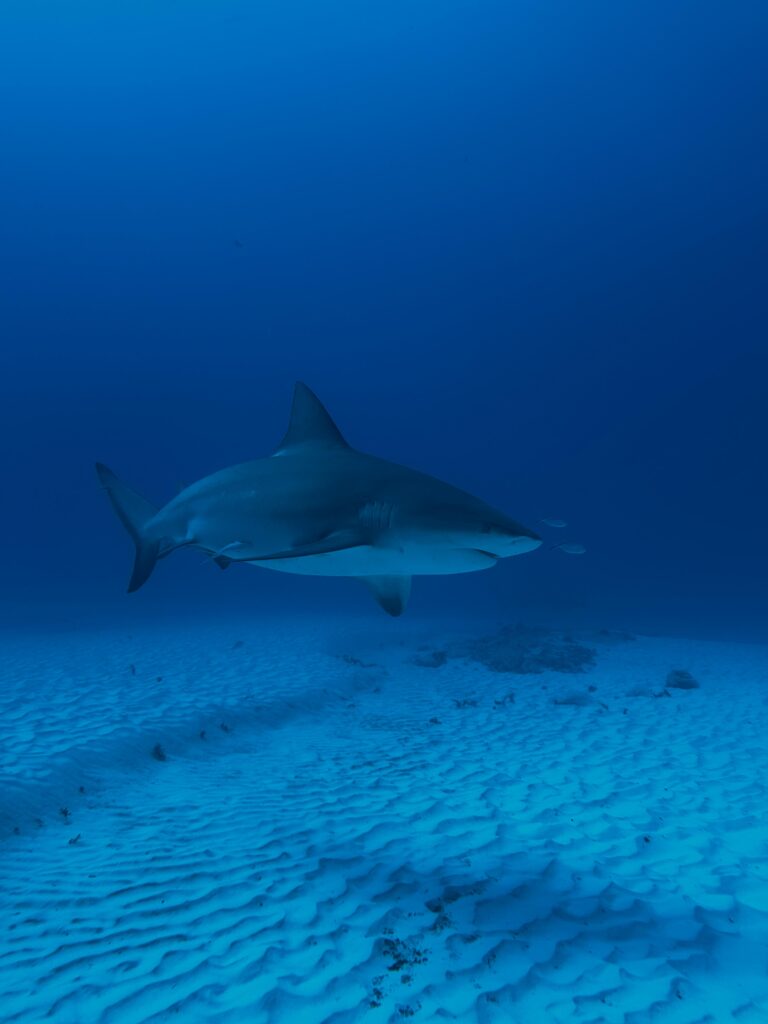
Photo: Shannan
Ethical Criticisms of the Playa Shark Dive
But it’s not all positive; there are some legitimate concerns when it comes to shark experiences like this one.
Feeding alters natural behaviour
The biggest concern with feeding dives is that we are changing how sharks behave. Even when sharks are not directly fed, the presence of bait can:
- Condition sharks to associate humans, boats, & divers with food
- Alter natural movement patterns
- Increase shark density in one area
- Affect the local food chain (sharks hunt less, moving other fish populations out of balance)
Some conservationists argue that any activity that changes wildlife behaviour for tourism deserves serious scrutiny.
This is a general concern for all feeding dives. In the case of Playa, they have not observed any changes to behaviour. The sharks come when they smell the food, but otherwise continue their natural habits in the winter. They don’t seem to hang around at Shark Point waiting to be fed.
This is not the case everywhere, though. In Roatan, the operators of Roatan Shark Dive keep the sharks in the same area by feeding them at the same time every day, whether or not there are tourists. This has greatly impacted shark behaviour around the island.
Feeding Impacts the Food Chain
If sharks are being fed, they have no reason to hunt in the local reefs. This destabilizes the food chain locally.
This applies to all feeding activities – like snorkel tours. Many snorkel guides will feed fish for better tips
Normalizing wildlife manipulation
Another concern is the broader message feeding dives send. While this dive may be tightly controlled, it can still reinforce the idea that manipulating wildlife is acceptable for tourism, especially when less experienced operators elsewhere try to replicate the model without the same safeguards.
The ethical question becomes less about one location and more about the precedent it sets.
Not all sharks benefit equally
While bull sharks are the focus here, conservation benefits are not always evenly distributed across species or regions. Shark tourism can protect individuals in one area while having little impact on broader threats, like:
- Longline fishing
- Bycatch
- Habitat loss
A single dive experience does not automatically translate into systemic conservation outcomes.
What you can do to have a positive impact
Measure your expectations.
Tourism experiences like the Playa Shark Dive only exist because there is demand for them. As humans, we have come to expect that we can get anything we want, including the sights we see underwater.
If we are content on every dive seeing whatever the ocean brings us, the demand for feeding dives dries up completely.
The same has been found for other animal experiences, like safaris. Many African operators are finding overcrowding affecting migration patterns, or guides being influenced to harass or chase wildlife in order to please tourists and ensure a good ti.
Call out bad behaviour
If you are ever on a tour and you see guides feeding, touching, or harassing wildlife, here’s what you can do:
- Speak to the guide & understand if they know the impact they are having
- Email the owners & managers of the operation
- Leave a review
These are the steps I take, in order. If the guide doesn’t seem interested in changing their behaviour, I will speak to management. If management doesn’t care or respond, I will leave a review.
Reviews are powerful tools for us to demand change, but use them responsibly.
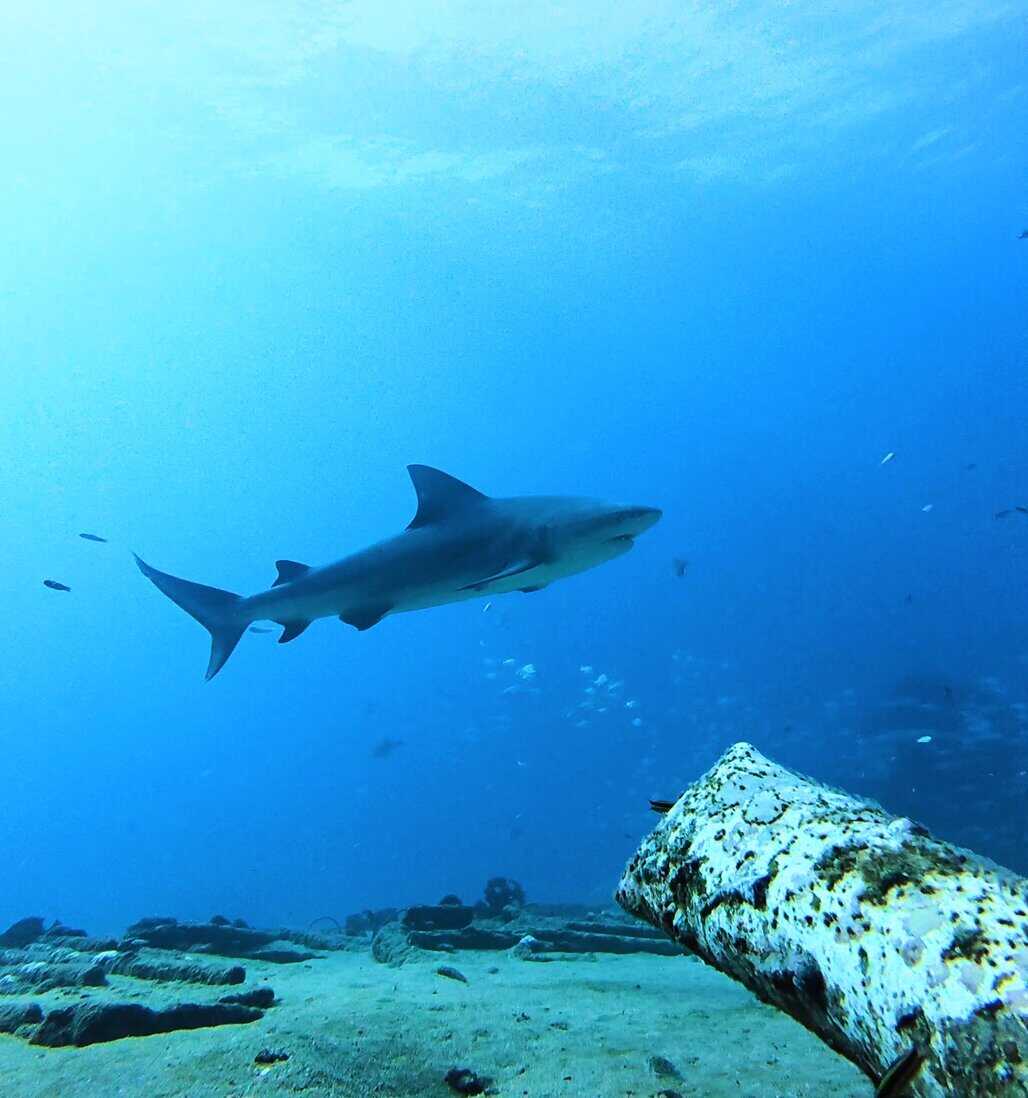
Photo: Shev
So… is the Playa del Carmen shark dive Ethical?
Honestly, I don’t know.
I personally feel that the shark crisis is so dire that anything we can do to make people interested/care/invested in ensuring their survival is a win. But I do think we will feel the impacts of these behaviour changes we are creating.
As far as Shark Dives go, the one in Playa del Carmen is very well run by a great team of community leaders.
Also not all the operations permitted to do the shark dive also feed. But the sharks are accustomed to being fed in that location, so all divers benefit from the sharks being there, out of the expectation of being fed when they hear the sound of the boat.
I hope this article helps you better understand sharks, their value, and the intricacies of the Playa del Carmen Shark Dive so you can make an informed decision to dive with them, or not!
FAQ – Playa Bull Shark Dive
Is it safe to dive with Bull Sharks?
Bull sharks have a reputation as being more curious and bold than other species, making people feel they are dangerous. When the procedures at Playa del Carmen shark dive are properly followed, incidents are almost non-existent.
Is the Playa del Carmen shark dive ethical?
This can only be answered by you! All interactions we have with nature have an impact, you have to decide if you are ok with the controversy around the PDC Bull Shark Dive.
Do feeding dives change shark behaviour?
Feeding dives like this one can influence shark behaviour by creating associations between certain cues, such as boats or divers, and food. So far the impact on the sharks in Playa seems to be low, as they don’t seem to stick around waiting for food. Only when there are divers present.
Other Places to Dive with Sharks in Mexico
Want to dive with sharks, but not sure about the Playa del Carmen Shark Dive? Here are some places to check out that don’t feed!
Cabo Pulmo
A small fishing village off the coast of Baja California Sur, Cabo Pulmo is another great example of a community banding together to protect their waters. This is one of my favourite places to dive in Mexico.
You can see a few types of sharks here, but they are famous for El Vencedor, a bull shark cleaning station that is active year-round. Sharks here are not chummed, fed, or baited.
Mahahual
Just a few hours south of Playa del Carmen is Mahahual, another small town on the coast. Here they have the famous atoll Banco Chinchorro.
Boat rides are upwards of an hour, but absolutely worth it. Here you dive healthy reefs guided by nurse sharks and black tip reef sharks, every dive!
Gordo Banks, Baja California Sur
From Los Cabos, you can book a dive trip to Gordo Banks. Here there is an underwater pillar that attracts female hammerheads & their young!
The point is active year round, but it takes a trained guide to get you there. It’s also a deep dive that can be subject to strong current, so only go if you are a confident diver with at least Advanced Certification!
I recommend my friend Tono at Dive Baja, or Cabo Private Guide.
Other Dives Near Playa Del Carmen
Honestly the diving near Playa del Carmen isn’t amazing. The reef has taken a lot of damage over the last decade. But you can still get some dives in, check out someo f these alternatives:
Cozumel – by far my favourite place to dive in this part of the Caribbean. I enjoy diving here more than Belize, Roatan, Playa, or Utila. The visibility is great, and they get so much life because of the currents.
Cenotes – if you’re looking for a totally different dive experience, go for a cenote dive! These freshwater caves are all over teh Yucatan Peninsula & Riviera Maya.
Shev’s Summary – Diving with Bull Sharks in Playa
Ultimately, whether you choose to dive with bull sharks in Playa del Carmen or seek out non-baited encounters elsewhere, the most important thing you can do as a diver is to observe with respect, ask questions, and support operators whose practices align with both your ethical values and the long-term health of the ocean.
Happy Bubbles!