Ultimate Baja Whale Watching Road Trip: 7-14 Day Itinerary

I just came back from the most amazing 10 days of my life. And I’m not even being dramatic.
In one trip, I saw blue whales, humpback whales, grey whales, mobulas, dolphins, whale sharks, thresher sharks, and orcas!
Travel is a big part of my life, so you’d think I’d be used to it. But when I tell you I just packed a year’s worth of bucket-list wildlife interactions into just over a week, I am just as surprised as you. I may have been looking for whales, but I got so much more!
I spend about 6-8 weeks in Baja California every year. Since 2022, I have been able to visit every season, diving, surfing, snorkelling, and adventuring. And every year, I fall in love a little more with the Pacific and this part of the world.
In early 2026, I had a few weeks available during peak whale season and decided to just go for it! I put together the most epic marine encounter road trip and tested it out myself.
In just 11 days, I visited Cabo Pulmo, La Paz, Loreto, Magdalena Bay, and Cabo San Lucas. That’s more than 1,300km! But it was worth every minute in the car.
So buckle up, whether you have 1 week, 10 days, or 2 weeks to adventure the Pacific Coast of Mexico, I can promise you it will be full of moments you’ll never forget.
Let’s go see some whales!
What You’ll See on This Trip
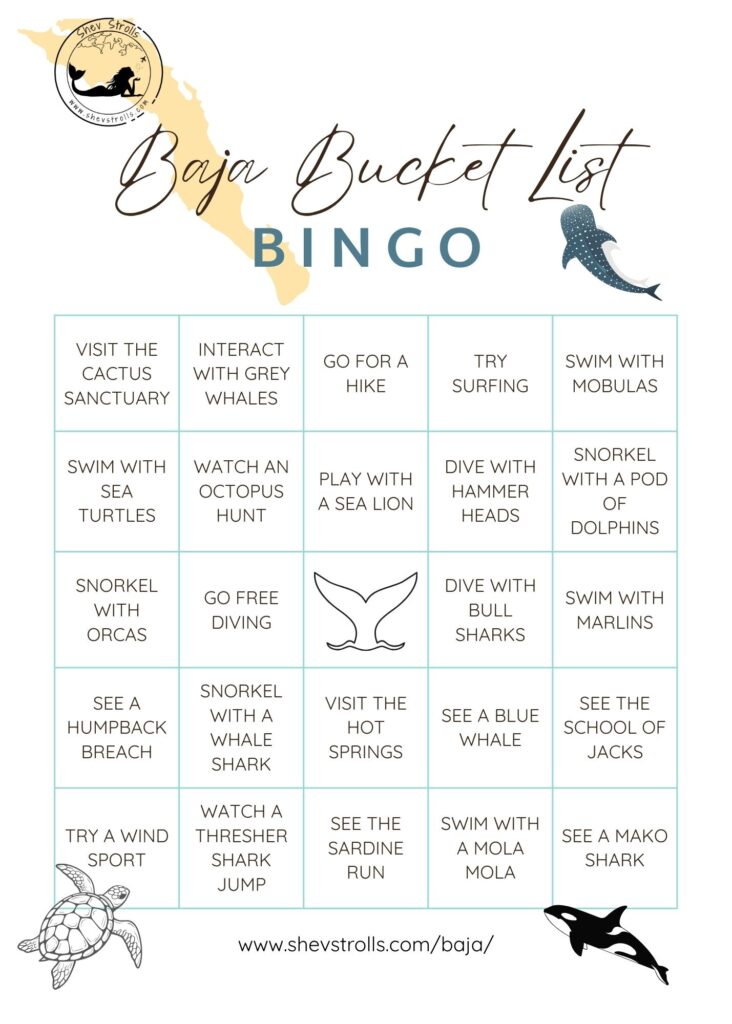
Why take a road trip through Baja in winter? To see:
- blue whales in Loreto
- grey whales in Magdalena Bay
- breaching humpback whales
- whale sharks in La Paz
- orcas in La Ventana
- bull sharks in Cabo Pulmo
Baja Whale Watching Road Trip
I designed my itinerary to start and end from the Los Cabos (SJD) airport. The route is a loop, with max 5 hours of driving at a time, but usually just 2-3. Here are the stops along the route:
- Cabo Pulmo
- La Ventana
- La Paz
- Loreto
- Magdalena Bay (San Carlos)
- Todos Santos
- Cabo San Lucas
- End back at the Los Cabos Airport
No matter which itinerary route you choose, you’ll cover half of the state of Baja California Sur, about 1,300-1,400 kilometres!
Despite covering so many miles, we never spent more than 3-4 hours in the car, except on the last day when we decided to hoof it back to Cabo San Lucas from San Carlos.

Why BCS, Mexico is one of the Best Places in the World to See Whales
Baja California is a peninsula that sits between the Gulf of California (Sea of Cortez) and the Pacific Ocean. The highway weaves back and forth between the two coasts, giving us access to many different marine migrations that happen here every year.
So, what makes Baja California unique?
Ocean on all sides
BCS has access to the Pacific Ocean (cold, huge, and full of life), and the Gulf of California (sheltered, warmer, accessible from the Pacific).
Baja California Sur has many lagoons & bays that have calmer and warmer water than the deep Pacific. This gives animals a safe place for their young to grow and gain strength.
Safe Spaces
The Sea of Cortez has less current and waves, and the water warms slightly more than the Pacific.
Along both coasts, there are many lagoons and bays. These provide shelter spaces for breeding and caring for young.
Most animals that come here are migrating from the Arctic, where they feed in the summer in the nutrient-rich water. The water in Baja stays warmer than the rest of the North American Coast, so they migrate here for the winter.
Pelagic is the word for marine life that does not stay in one location. Pelagic animals follow food and current patterns, constantly moving. Whales, most sharks, mantas, mobulas, etc. are types of pelagic animals.
Variety of Life
Baja California Sur becomes home to all kinds of life in the winter. You can see whales, rays, sharks, dolphins, marlins, big schools of fish, mola-molas, turtles, and even orcas!
Wildlife Encounters on Your Baja Road Trip
Of course, you can never guarantee an animal sighting, but here is what we hope to see on this Baja road trip!
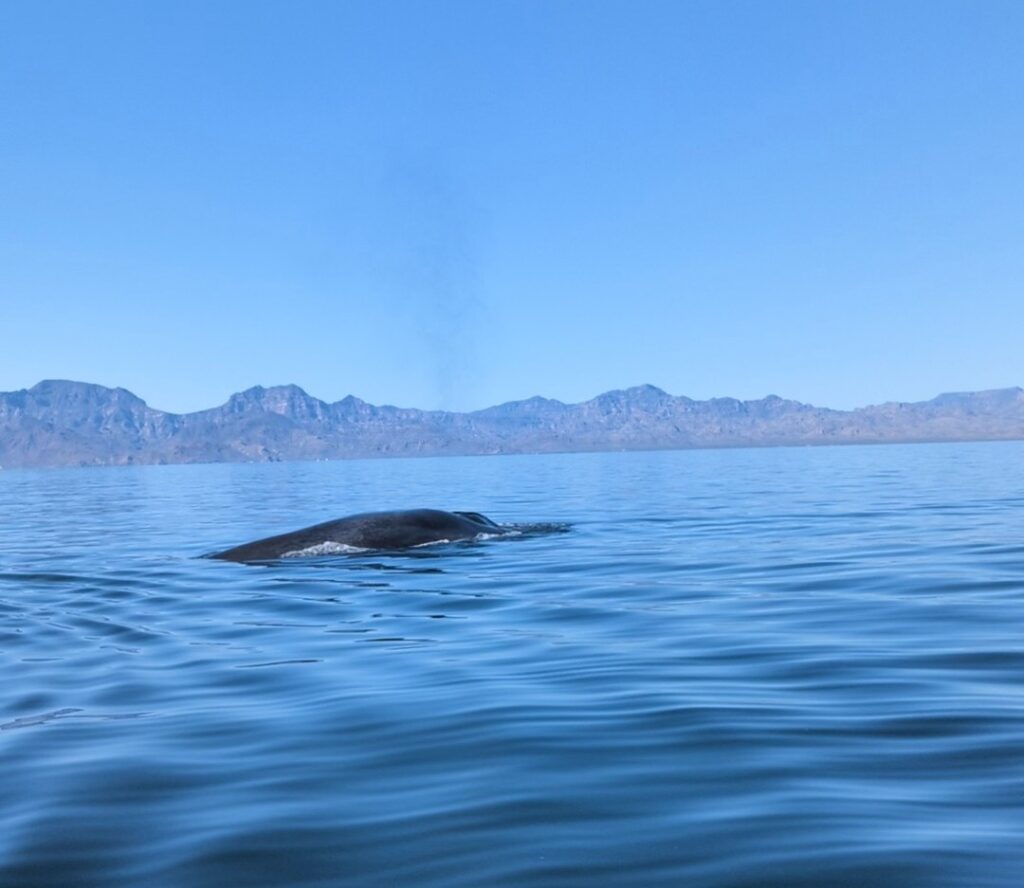
Photo: Shev
Blue Whales (Loreto)
This was my reason for planning this road trip. Blue Whales are the largest animals on Earth, and it’s been my dream to see one since I was a kid! There are not many places in the world where you can reliably see them, which makes Loreto incredibly special.
Best time: January – March
Location: Loreto, Baja California Sur
Experience: Boat-based whale watching
Best Time to See Them
Blue whales come into the bay around Loreto, BCS, from January to March every year.
Whales are most active first thing in the morning, and by 11:30 am, they have moved further out and are harder to find.
Where to See Them
The Blue Whales gather in the protected bays around the islands of Loreto National Park.
Tours typically explore the area between Loreto and nearby islands like Isla Carmen, where the whales come to feed and move through the bay.
You can take a blue whale tour directly from the marina in Loreto.
How to see them
Blue whale encounters are strictly boat-based. You are not allowed to enter the water, and all tours follow regulated wildlife guidelines.
Tours depart from the Loreto marina, and you’ll need a Loreto National Park pass for the day. Some operators include this, but if not, you can buy a wristband from one of the local vendors near the marina.
Shev’s Experience
On my blue whale safari in March 2026, we saw dozens of blue whales just outside the marina. The entire bay sounded like a choir.
Their blowholes are so powerful that you can see and hear the spray from across the water. Everywhere we looked, we could see the water spouts backlit by the islands.
They also came MUCH closer to the boat than I would have imagined. This made the experience even more incredible.
We were very lucky; sometimes you have to search farther around the islands, but we had whales between Loreto and Isla Carmen for most of the morning.
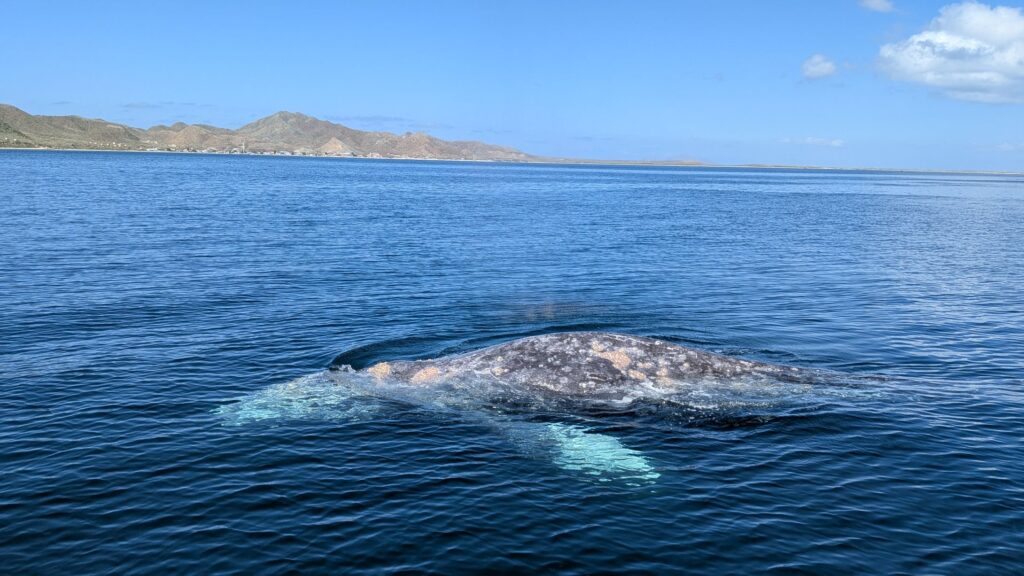
Photo: Shev
Grey Whales (Magdalena Bay)
Grey whales are perhaps the most famous whales of this trip. The population that migrates to Baja is known for being incredibly curious and interactive with humans.
They often approach boats on their own, sometimes lifting their heads out of the water or even bringing their calves alongside. This is one of the most unique wildlife encounters in the world.
Best Time: January-March
Location: Magdalena Bay, San Ignacio Bay, or Guerrero Negro
Experience: boat-based whale watching
Best time to see them
Grey whale season runs from December to March, with peak encounters in early to mid-February.
This is when mothers and calves are most active in the lagoons.
Where to see them
Grey whales are found along the Pacific coast of Baja, but Magdalena Bay is one of the best and most accessible places to experience them on a road trip.
Magdalena Bay is a sheltered area along the Pacific, so the water is still cold but very calm. Protected from the wind and currents of the Pacific. That’s why the whales come – to relax!
Tours usually depart from San Carlos or Puerto Magdalena and take you into the calm lagoon areas where the whales gather.
A friend also suggested Puerto Adolfo, but San Carlos fits better into our itinerary.
How to see them
Grey whale encounters are done by small panga boats with an optional local guide.
The experience is very regulated, but still incredibly intimate. In many cases, the whales choose to approach the boats themselves, which is what makes this encounter so special.
Shev’s Experience:
I got a private boat for my family and chose to get a local guide. I am SO glad we did! The guide is interesting, knowledgable, and works with the captain to make the best experience for us.
They knew how to read the whale’s behaviour, keep us away from other boats, and added to the experience with bird-watching, a pod of dolphins, and taking us to Puerto Magdalena for lunch.
Also, the guide spoke English, and the captain did not. Something to keep in mind.
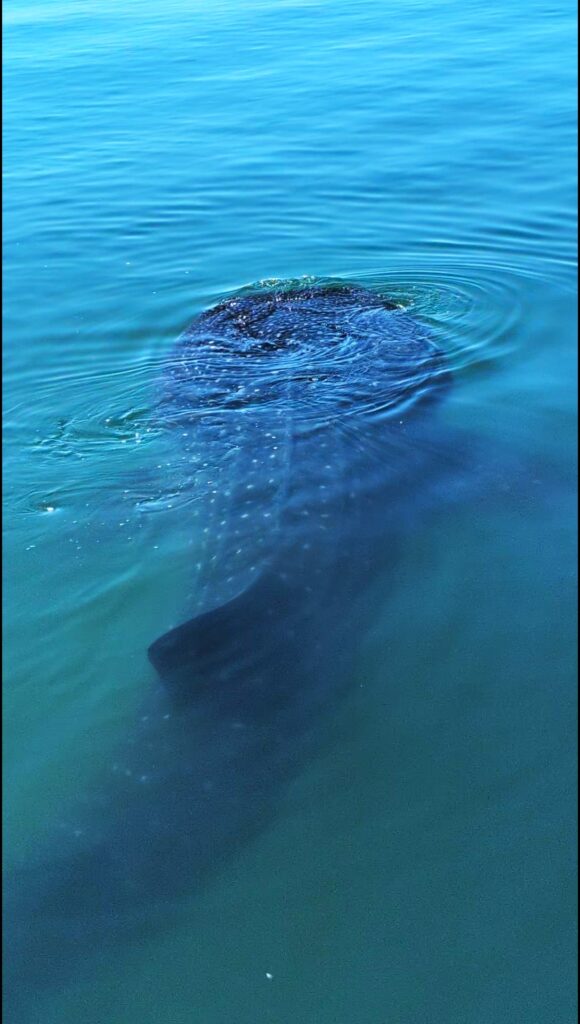
Photo: Shev
Whale sharks (La Paz)
Whale sharks come to La Paz to grow, eat, and avoid predators. The individuals here are all juveniles, and usually males. This is different from many other whale shark destinations.
This area is heavily protected, which creates a safer environment for the animals and a more enjoyable experience for visitors.
Best time: November–April
Location: La Paz Bay
Experience: guided snorkelling
Best time to see them
Whale shark season in La Paz typically runs from November to April, with the highest chances of sightings in the winter months.
Where to see them
Whale sharks are found in a designated protected zone just off the coast of La Paz.
All tours operate within this regulated area, and access is controlled to limit the number of boats and swimmers.
How to see them
Swimming with whale sharks is strictly regulated in La Paz.
Before entering the water, boats must check in with the park office, and only a limited number of boats are allowed at a time.
Rules for whale shark interactions
- maximum 5 snorkellers + 1 guide per whale shark
- no freediving or diving down toward the animal
- maintain at least 2 metres distance
- wearing a PFD or wetsuit is required
Plus obvious things like no touching the whale sharks or jumping on top of them!
The rules might sound tough, but trust me, they make for a much better experience.
Then the next group goes, and you watch them snorkel with the whale shark. Then they come back, and it’s your turn again.
Shev’s Experience
I got to snorkel alongside a whale shark with just my parents and a friend. Just us and a WHALE SHARK.
We would pull the boat alongside it, jump in, and swim with it for as long as we could. Then we’d get back in the boat, and the other group would have a turn.
It felt calm, uncrowded, and intimate.
There were only 6 boats in the bay during our tour, but there can be up to 14. The boats spread out so each boat has its own whale shark, they don’t all crowd 1 or 2.
One thing to know is that whale sharks are fast! It helps to be a strong swimmer.
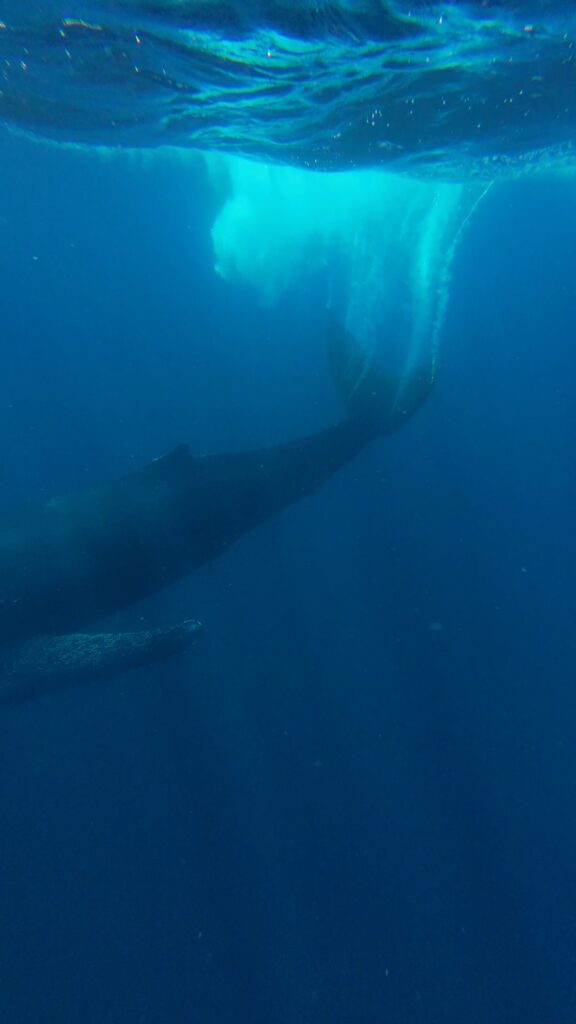
Photo: Shev
Humpback whales (Pacific side & south Sea of Cortez)
Humpback whales are the most common whale to see along the Pacific coast of Baja. They migrate here to breed and give birth, and are known for their acrobatics. Breaching, tail-slapping, and surface shenanigans.
Best time: December–March
Location: Cabo San Lucas, La Paz, Cabo Pulmo, La Ventana, or anywhere on the Pacific coast of Mexico
Experience: boat-based whale watching or incidental sightings
Best time to see them
Humpbacks are most active from December to March, with peak activity in January and February.
Where to see them
You can see humpback whales all along the Pacific side of Baja, and even into the southern Sea of Cortez.
Cabo San Lucas is one of the most reliable places, but they can also be spotted from Cabo Pulmo, La Paz, and La Ventana.
How to see them
Humpbacks are often seen during whale watching tours, ocean safaris, or even while diving or travelling by boat.
They are one of the easiest whales to spot on this road trip.
Shev’s experience
When I lived in Huatulco, Oaxaca, we saw humpbacks almost every day just from the dive boat!
And on this trip, when we were arriving to Cabo Pulmo, we watched 2 humpbacks jumping and breaching just offshore, only a few hours after landing.
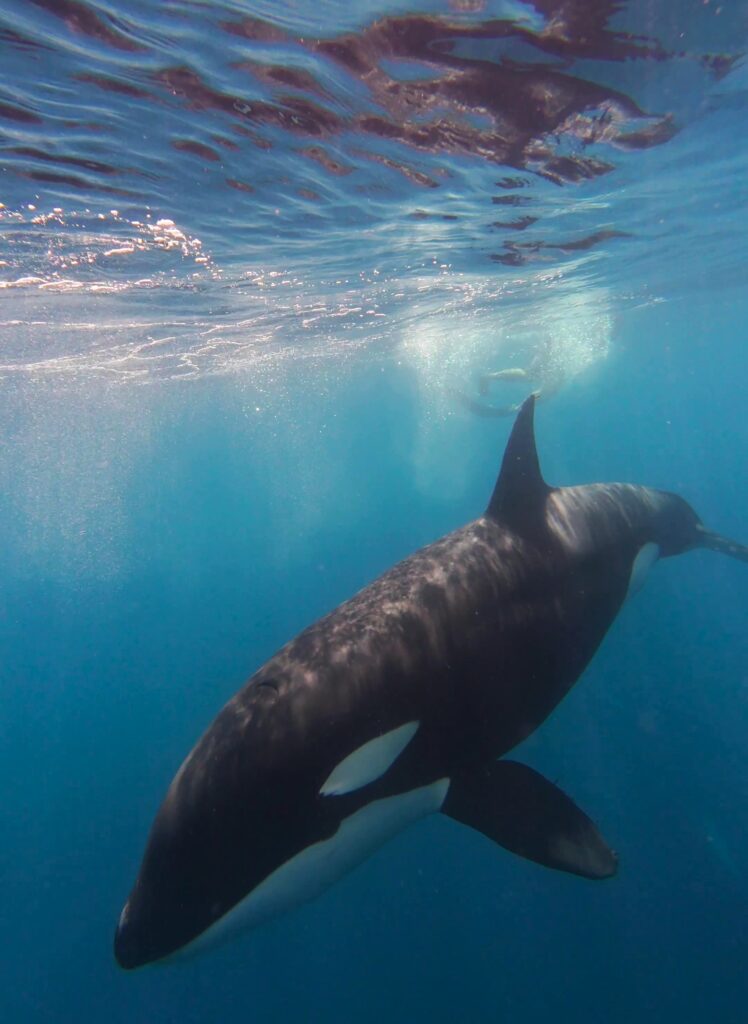
Photo: Shev
Orcas (Rare sightings in Cabo, La Ventana, or La Paz)
Orcas are the ultimate bonus sighting on this road trip.
They follow their food, and since so many marine animals migrate to Baja in the winter, orcas occasionally pass through the region as well.
But, not impossible! If there are orcas around, most other things will hide (to avoid being eaten). So you either have a really epic or really quiet safari.
Best time: winter (unpredictable)
Location: Cabo San Lucas, La Ventana, La Paz
Experience: ocean safari (if you’re lucky)
Best time to see them
There is no guaranteed season for orcas in Baja, but sightings are more likely in winter when prey is abundant.
Where to see them
Orcas are most often spotted offshore during ocean safaris from Cabo San Lucas, La Ventana, or La Paz.
Plus all the things you can see in Baja year-round, like mobulas, marlins, dolphins, big schools of fish, etc.
Shev’s experience
I heard orcas had been spotted in Cabo San Lucas, so we specifically went out on safari hoping to find them. We spent 4 hours, but didn’t find any and the ocean was very quiet.
While we didn’t see them this time, we did see thresher sharks, mako sharks, turtles, humpbacks, and mobulas, which definitely made up for it.
But we tried again in La Ventana and had the most incredible interaction with a family of 4. So if you get lucky, you get really lucky!
Other Marine Life You Might See in Baja
In addition to whales and whale sharks, Baja is full of incredible marine life year-round. On your safaris and tours, you might see:
- mobula rays
- dolphins
- sea lions
- marlins
- turtles
- sharks
- large schools of fish
- and anything else found in the Pacific!
Photo: Shev
Types of Ocean Experiences in Baja
I mention a few types of interactions in this post; here’s some more info on what the different experiences mean.
Ocean Safari
You’ve heard of an African Safari, now imagine that but on the sea! A safari means you go out on a boat and look for wildlife. Boats often talk to each other and let each other know what they’ve found. If you find animals like mobulas, dolphins, or orcas, you can get in and snorkel with them. Whales are protected (and so, so big), and you can only watch them from the boat.
Snorkelling
I’ve snorkelled from a safari and a dive boat, it just depends on what the ocean gives you that day. If you book a snorkelling specific tour, they will take you to animals you can snorkel with, or a reef if you don’t find anything that day.
Diving
Obviously, my priority when travelling normally is diving. What I love about most Pacific dive shops is that they will look for wildlife and aren’t afraid to extend the day if it means you get to see something cool.
The dive shops I’ve used in Los Cabos, Cabo Pulmo, and La Paz are always happy to extend the surface interval if it means snorkelling with dolphins or watching mobulas leap from the water.
So if you dive in Baja, you might get the best of both the surface and underwater worlds!
Baja Whale Watching Stops
Cabo Pulmo
I spend a few weeks diving in Cabo Pulmo every year, and it never gets old. It’s so beautiful, easy to get to from Los Cabos, and the wildlife is amazing.
Wildlife in Cabo Pulmo: Humpbacks, dolphins, mobulas, sea lions, bull sharks, and big schools of fish.
Things to do: scuba diving, snorkel tour, hike
Restaurants:
El Caballero
Tito’s
Coral Reef Restaurant
Tacos y Beer
Where to stay:
Bungalows Las Palmas
El Nido (for a group)
Casa Pajeros
La Ventana
An optional stopover between Cabo Pulmo and La Paz, La Ventana is a small town known for its perfect conditions for wind sports. You’ll find everything from kite-surfers to paragliders to power gliders in this small section of coast.
But La Ventana also has great access to diving and ocean animals. It’s in between La Paz and Cabo Pulmo, so it catches a lot of things moving along the coast. It’s also become a popular free-diving spot.
Wildlife in La Ventana: Orcas, Blue Whales, Humpback Whales, Dolphins, Mobulas.
Things to Do: Windsports (kite surfing, wing foiling, paragliding, power gliding, etc.), freediving, scuba diving, ocean safari.
Where to Stay:
💲The Colony Hostal (private rooms available)
💲💲Stella Maris Boutique Hotel
💲💲💲Hotel Todo Bien (beachfront)
Restaurants:
Restaurante Palapa el Arroyo
Birrieria Don Manuel
Pizzas Baja
Polvora
La Paz
Whenever I tell people I’m going to La Paz I hear “oh I love La Paz”. A city that maintains its small-town feel, La Paz is quiet town on the Gulf of California coast that has it all.
Wildlife in La Paz: Sea Lions, Whale Sharks
Things to Do: snorkel with whale sharks, snorkel with sea lions, dive
Where to Stay:
💲El Saltito Housing
💲💲Condo Rosales (where I stayed with my family)
💲💲Villas Esterito (where I stay when I’m by myself)
💲💲💲Condo Cortes La Paz
Restaurants:
Harker Board Co (local brewery, rooftop)
Los 32 Sabores
Balam Cocina de Raiz
Loreto
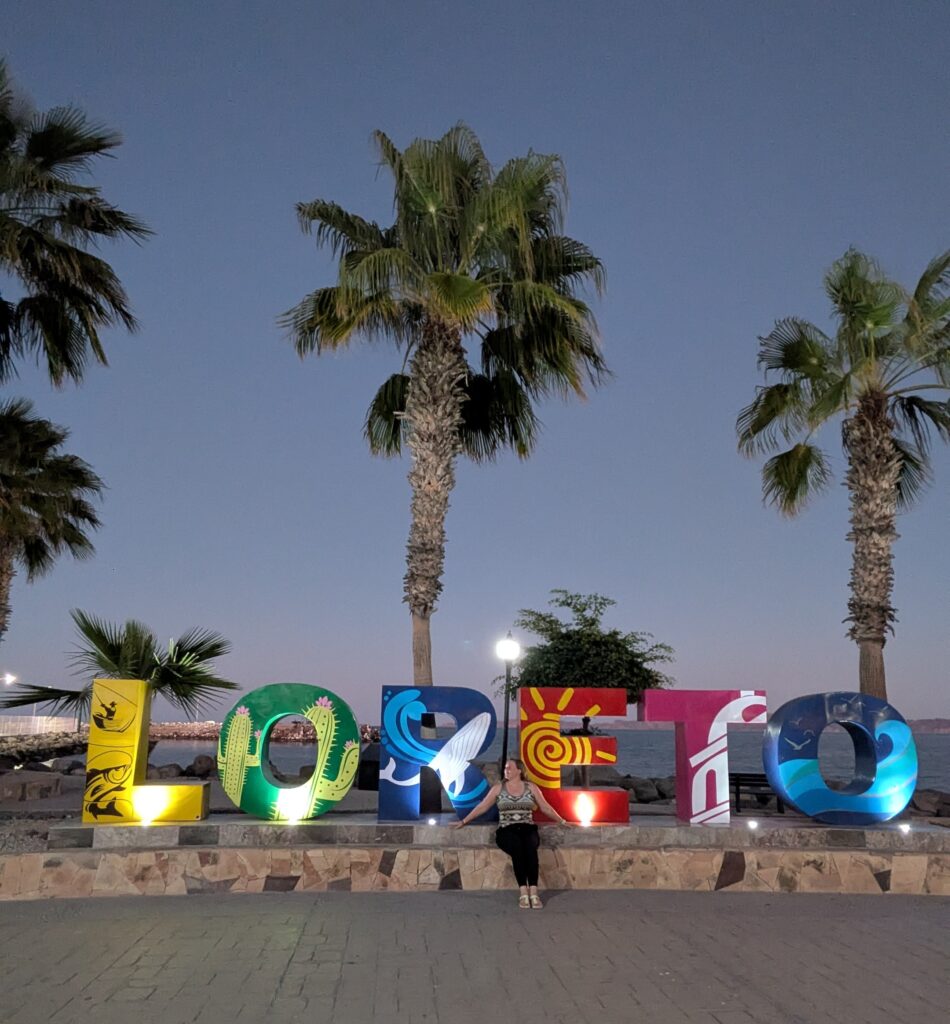
This was my first time in Loreto, and I loved it! It’s a coastal town that has kept its Mexican roots more authentically than the south of Baja. Way fewer foreigners live here, which has kept the vibe beautiful and chill.
Wildlife in Loreto: You come to Loreto to see the Blue Whales! From January to March, the blue whales come into the bay in front of Loreto to feed. You can also snorkel with sea lions here.
Things to Do: Blue Whales Safari, Coronados Island Tour, Kayaking Tour, Ebike Adventure,
Where to Stay:
💲Casas Centro Loreto
💲💲 Hotel Oasis (waterfront)
💲💲💲Hotel La Mision (historical, stunning property)
Restaurants
Casa Madera (local breakfast)
Off the Hook Cantina
Orlando’s (need a reservation)
San Carlos (Magdalena Bay)
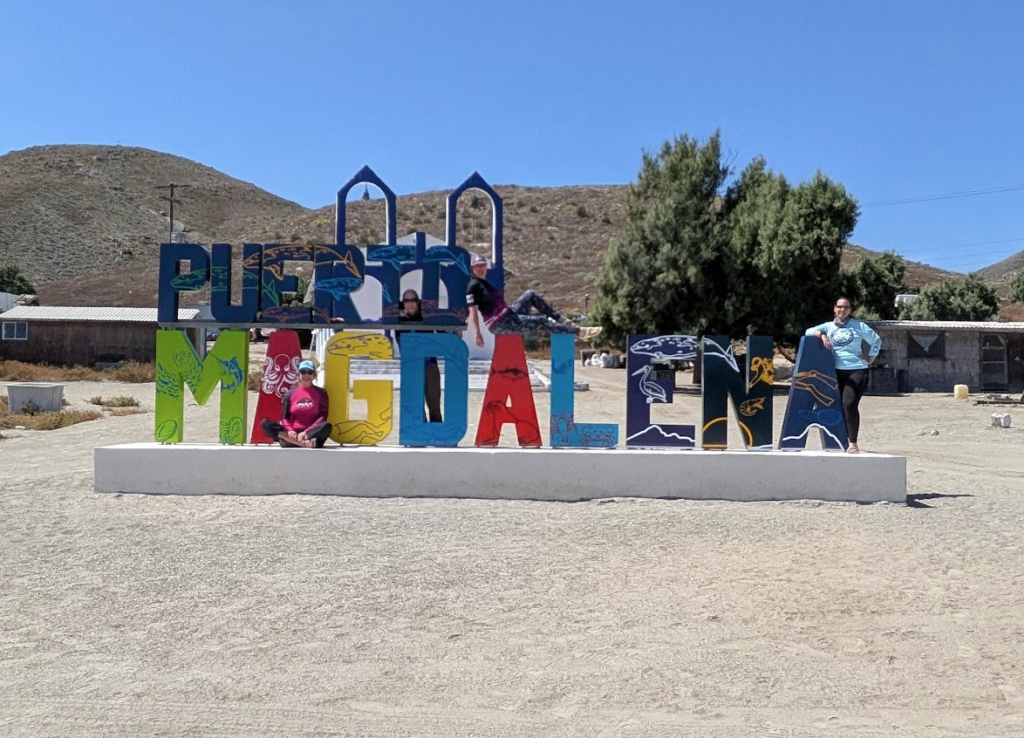
Magdalena Bay is a large bay with several small towns dotted along it. I chose San Carlos for our grey whale experience because it makes the most sense for this driving route. But grey whales can be seen all along the west coast of Baja.
Wildlife in Magdalena Bay: grey whales, bird watching. It’s also a base for the sardine run, Oct-Dec.
Things to Do: grey whale safari, enjoy the small town, Pacific side safaris, stay in a glamping hotel.
Where to Stay: Accommodations are very expensive in San Carlos. We stayed just 1 night, but I wish we had stayed 2 so we could see more of the town.
💲Hotel Alcatraz this is where I stayed. We had 4 twin beds in a big room, which was fine for one night. The staff were lovely and made us breakfast early in the morning before we left for our tour.
💲💲Kayak House
💲💲💲Two Bedroom suite
If you’re here for the sardine run season (October to December), you might be based on Magdalena island and can enjoy a glamping camp like Magdalena Bay Whales.
Restaurants
Sunset Restaurant – I had a wonderful meal here watching the sunset
Restaurant Mira Mar – we had an amazing home-made lunch here after our grey whales tour
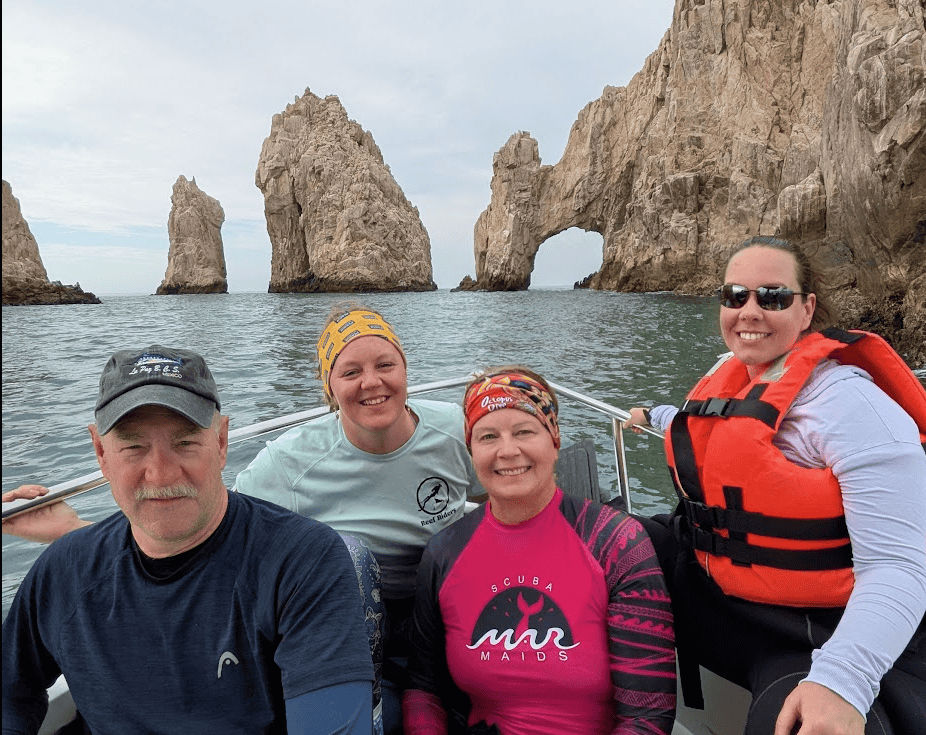
Photo: Shev
Cabo San Lucas
My least favourite town in Baja, Cabo San Lucas is the tourist hub of the area. It’s home to the cruise port and every spring break party cliche you’ve ever heard of.
BUT, it also has the best access to the ocean. So that’s why I still end up here every year.
CSL is where the Gulf of California and the Pacific Ocean meet, so the wildlife sightings here are incredible, all year round.
Wildlife in Cabo San Lucas: a chance of anything that lives in the Pacific or Sea of Cortez. Dolphins, whales, sharks, mobulas, orcas, everything! And all year long there is something different to see.
Things to Do in Cabo San Lucas: scuba dive, whale watching, ocean safari, snorkel, Gordo Banks excursion
Restaurants:
Athena Restaurant: My absolute favourite place in Baja. Locally owned, beautiful breakfast and coffee.
Tropical Kitchen: organic and vegan food with a mexican flair. Always delicious.
Maria Jimenez Restaurante Mexicano: hearty mexican food with beautiful presentation and a family run feel. My go-to for birria!
Baja Whale Watching Itineraries
So, how do you fit all these stops into one epic road-trip? Here are three itineraries I came up with to help you get the most out of this paradise.
Some tips & resources for following these itineraries:
- Use my google map I put together & download it. I’ve pinned everything from accommodations to tours to restaurants to the directions here, with links!
- Download my PDF itinerary. All the same good info you have here but in your pocket and with pretty pictures.
7 Day Baja Road Trip (Fast-Paced Highlights)
This itinerary is tight, but not impossible! If you only have a week, here’s how to see the best of Baja in just 7 days.
Day 1 – Arrival to Baja
Arrive to Los Cabos airport, pick up your rental car, drive to Cabo Pulmo.
Day 2 – Choose your ocean adventure
AM
- 2 morning dives
- Snorkel tour
I recommend diving, as Cabo Pulmo has some of the best diving in Baja. You’ll also spend a lot of time on boats this trip, so any chance to get in the water is great!
PM – Travel to La Paz (2 hours)
Day 3 – Snorkelling with Whale Sharks
AM Snorkel with Whale Sharks! Best in the early morning. If you get the 7am slot, you will be back by about 10:30 so you can do the Sea Lions in the afternoon.
PM Snorkel with Sea Lions at Isla Espiritu Santo
I like this tour because its lead by a marine biologist, includes a stop at Balandra, and leaves at 11 so you can do the whale sharks and sea lions the same day.
Day 4 – Beach Day & Travel to Loreto
AM – visit La Balandra beach (if you didn’t go there on the sea lion tour).
PM – Drive to Loreto (about 4 hours)
Day 5 – Blue Whales Safari
AM – Blue whales! Tours leave early, you’ll be back for a late lunch (1 or 2pm)
PM – Drive to San Carlos (2.5 hours)
Day 6 – Grey Whales!
AM – Grey whale safari. Safaris leave early, you’ll be back between 12 & 2pm, depending on if you stop at Puerto Magdalena or not.
PM – Drive to La Paz or Todos Santos
Here you can choose your adventure. I recommend driving part way and staying the night in Todos Santos or La Paz. Both are close enough to Los Cabos Airport that you can get there the next day.
Day 7 – Travel home
AM – Relax on the beach, shopping
PM – Fly out of SJD
I drove from San Carlos all the way to Cabo San Lucas, and it was nice to then be able to rest the next day. But I don’t recommend it, you will be tired!
Most flights from SJD leave after 1pm, with the toll roads you have plenty of time to get there.
If you are able to fly from La Paz, that’s even better!
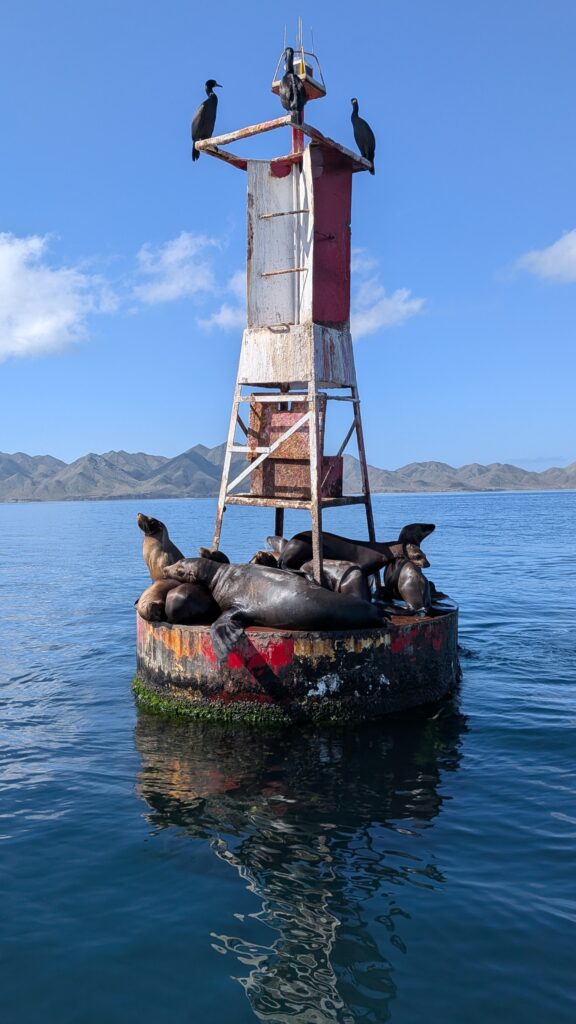
Photo: Shev
10-Day Baja Whale Watching Road Trip (Balanced, What I Did)
This is the itinerary I did in 2026. It was still very busy, but we got to do more & rest more than you can fit in the 7 day trip.
Day 1 – Drive to Cabo Pulmo
Day 2 – Exploring Cabo Pulmo
AM – 2 or 3 dives or snorkel
PM – Evening hike
Day 3 – Cabo Pulmo to La Paz
AM – 2 morning dives or rest.
PM – Drive to La Paz
Day 4 – Whale Sharks & Sea Lions
AM – Whale Shark snorkel
PM – Sea lion snorkel
Day 5 – Rest, La Paz to Loreto
AM Visit Balandra or two morning dives
PM – Drive to Loreto (4 hours)
Day 6 – Blue Whales in Loreto
AM – Blue Whale safari
PM – REST
Day 7 – Rest & Road
AM – SLEEP IN
PM – Drive to San Carlos
Day 8 – Grey Whales
AM – Grey Whale Safari
PM – Drive to Cabo San Lucas*
It’s a long drive, but if you get lunch at Puerto Magdalena in your safari, you can leave right after the tour and drive back slow. We made lots of stops and were in Cabo San Lucas by 8pm.
*This is what I did, and was worth it for us. We drove 5.5 hours straight back to Cabo San Lucas so we could do one more safari. You might choose to stay another day in San Caarlos, or split up the drive and stay in La Paz.
Day 9 – Cabo San Lucas Safari
AM – Safari in the Pacific
This is the only Pacific safari of the trip, anything is possible! We decided to do it because orcas had been spotted in the area. We didn’t see orcas sadly, but we saw thresher sharks, mako sharks, so many turtles, humpback whales, and mobulas. So yeah, worth it.
Operator: I can’t recommend my friend Tono’s company, Dive Baja enough.
PM – REST. I highly recommend a beach or pool day. Or staring at the wall processing the trip. That’s what I did.
Day 10 – Goodbye till next time!
Most flights leave late from Los Cabos airport, so hopefully you can sleep in and start going through all the photos you’ve taken.
14-Day Baja Whale Watching Road Trip (Best Experience)
This is how I would have done the trip if my friend had more days off to go with me. It’s the 10-day itinerary with an additional day in Loreto, and 2 days in La Ventana.
Day 1 – Drive to Cabo Pulmo
Day 2 – Exploring Cabo Pulmo
AM – 2 or 3 dives or snorkel
PM – Evening hike
Day 3 – Cabo Pulmo to La Ventana
AM – 2 morning dives or rest.
PM – Drive to La Ventana
Optional – stop at the Cactus Sanctuary then lunch in El Triunfo.
Day 4 – Try a Windsport!
AM – relax on the beach, paddleboatd, or try efoiling
PM – Try a windsport. I did 3 days of kiteboarding lessons and loved it!
Day 5 – La Ventana Safari
AM – Safari. I had the most insane experience of my life snorkelling with orcas in La Ventana.
PM – Drive to La Paz (40 minutes)
Day 6 – Whale Sharks & Sea Lions
AM – Whale Shark snorkel
PM – Sea lion snorkel
Day 7 – Rest, La Paz to Loreto
AM Visit Balandra or two morning dives
PM – Drive to Loreto (4 hours)
Day 8 – Blue Whales in Loreto
AM – Blue Whale safari
PM – REST
Day 9 – Rest day in Loreto
You will need it!
Or, explore more of Loreto while you’re here! Loreto is famous for it’s unique islands and bays, as well as unique history. It was the first settlement in Baja California Sur.
Here are some other cool adventures in Loreto:
- Coronados Island Tour
- Tabor Canyon Hike
- Historical Walking Tour
- South Carmen & Danzante Island adventure
Day 10 – Rest & Road
AM – SLEEP IN
PM – Drive to San Carlos
Day 11 – Grey Whales
AM – Grey Whale Safari
PM – Drive to Todos Santos
Day 12 – Beach Day at Cerritos
Todos Santos is one of my favourite towns in Baja. You could spend a day just enjoying the town, or head to the beach at Los Cerritos to dip in the Pacific.
Playa Cerritos is also where I learned to surf, if you’re up for even more adventure.
PM – Drive to Cabo San Lucas (45 minutes)
Day 13 – Cabo San Lucas Safari
AM – Safari in the Pacific
This is the only Pacific safari of the trip, anything is possible! We decided to do it because orcas had been spotted in the area. We didn’t see orcas sadly, but we saw thresher sharks, mako sharks, so many turtles, humpback whales, and mobulas. So yeah, worth it.
Operator: I can’t recommend my friend Tono’s company, Dive Baja enough.
PM – REST. I highly recommend a beach or pool day. Or staring at the wall processing the trip. That’s what I did.
Day 14 – Goodbye till next time!
Most flights leave late from Los Cabos airport, so hopefully you can sleep in and start going through all your photos you’ve taken.
When to See the Whales in Baja, Mexico
Whale season in Mexico is during the winter. The pelagic animals migrate from the Artcic where they feed in the summer, to the warmer waters of Mexico and Central America for the winter.
Animals move by the water, not according to our calendars so younever know exactly when hey will be around. But here is a month-by-month breakdown of generally when to see whales in Baja:
October
The sardine run starts in Magdalena Bay. I’ve seen humpbacks in Cabo San Lucas as early as the end of October.
November
Animals are starting to arrive, and the sardine run is in full swing. This is the best time to see the schools of jacks in Cabo Pulmo.
Whale sharks start to arrive in La Paz at the end of November.
October & November the water is still pretty warm – so that’s a definite bonus.
December
Whale season officially begins in December in Baja.
December is the best time for the sardine run in Baja, November is the busiest.
January
Animal activity picks up in January. Most animals have made the migration south by now. I find tourism drops off after the new year until February, so you might have less crowds this time of year too.
February – Peak Whale Month
While you can never predict nature, the absolute best chance of all whale activity is in February. They are the most active, and the highest populations are in February year over year.
The grey whales are also the most friendly in mid-February.
March – Busiest Season
March tends to be the busiest thanks to spring break around North America. So even though not everyone is whale watching, the Baja peninsula is full of tourists.
April – Shoulder Season
April can be hit-or-miss, but its great because there are no crowds. Peak season has passed, but there is always a chance of incredible sightings. And if you do get an animal interaction, you are likely to be the only one there.
April to July – Mobula Season!
As the whales head back north, the mobulas start to aggregate in Baja. You can see mobulas year round, but the huge fevers form in the spring from April to July.
Tips for Your Baja Whale Road Trip
Flights
If you can fly into La Paz it will save you driving time. Flights to La Paz are infrequent and expensive, but connect to some hubs in the US. Then you could skip Cabo San Lucas.
Car Rental
This itinerary only works if you rent a car. There are some public transportation options, but information for them is difficult to find.
My favourite company is Localiza, I’ve had excellent service from them. I always book through Discover Cars to compare vehicles and prices.
Note: Baja California Sur requires you to have rental car insurance. Localiza is the only one I have found to accecpt my other insurances. Other companies will make you pay for their insurance.
Phone Connection
Cell service is essential on this trip. There are long stretches of road and I would not recommend being without signal!
I am in Mexico a lot so I have a Mexican sim card, but if it’s a short trip I get a JetPack esim. TelCel has started restricting their sim cards to only Mexican residents. We were not able to get a sim card on this trip.
Spanish Language
Most places you get to visit on this road trip are true, local, Mexican communities. Do not expect most people to speak English!
You can communicate with Google Translate (another reason to have cell connection), and all our tour guides spoke English.
I speak fluent Spanish (thanks to Pimsleur and 5 years in Latin America), and that definitely heightened our trip experience. But as long as you are polite & humble, you will not have a problem with English!
Road Safety
As a Canadian these things are ingrained in me, but some road trip safety tips for Mexico include:
- keep your gas tank full as much as you can
- don’t drive at night (too many animals)
- have some cash handy
- have plenty of water with you (and snacks!)
- stop and rest as you need!
Responsible Whale Watching Adventures
I was very impressed by how regulated and respectful most wildlife interactions were on this trip.
Most of the stops along the way are within marine protected areas, and that makes all the difference.
Our only negative experience with tour guides was actually our orca experience in La Ventana. The experience itself was incredible, but I did not appreciate the attitude and behaviours of the company we went with. But I’ll cover that separately.
But La Ventana does not have any marine protected areas, so it makes sense that we had a different experience there than anywhere else!
General guidelines for sustainable wildlife interactions:
- keep your distance
- no touching
- avoid crowding
- do not get in front of animals or try to block their path. Always to the side
- follow your guides instructions and the park rules
Baja Road Trip Packing List
Here’s what I brought on this trip, or wish I had brought!
Binoculars
This is not something I normally travel with, but it might now. Some small birdwatching binoculars would have been amazing for scouting wildlife from the beach.
Baja Whale Watching FAQ
When is whale season in Baja California Sur?
Winter – whales can be seen from November to April, with peak season being January and February.
Where can you see blue whales in Mexico?
Loreto – this is the area famous for the blue whales and with the highest chance of sightings. But they have also been seen in La Ventana and La Paz.
Can you swim with whales in Baja?
No – it is not allowed to swim with whales of any kind. And honestly, I don’t think you’d want to. They are so much faster than you, and so big! You get a much better view from the boat or drone.
If you’re lucky, one might pass by you on a scuba dive!
Is it safe to drive in Baja?
Yes – it’s very safe to road trip in baja, I have done it many times myself (solo woman traveller), and with friends. The roads are good for the most part.
I avoid driving at night due to the wild animals and lack of street lighting.
Shev’s Summary: Is This Baja Road Trip Worth It?
I am not being dramatic when I say this has been the best trip of my life so far. I had more incredible animal interactions in just 10 days than I have had in most of my life combined!
I am still processing everything that happened on this Baja trip. The sound of blue whales taking a breath, grey whales looking into my soul, and keeping pace with a whale shark. I’m strongly considering doing it again next year – maybe with the sardine run?
This is the thing about ocean safaris, no two are the same! It’s hard not to get FOMO thinking “but what might I see next time??”
If you’ve ever dreamed about seeing whales, swimming with marine life, or experiencing the wild side of Baja California Sur, this road trip is absolutely worth it. Baja might just be the best place in the world for marine wildlife, and this road trip lets you experience it all in one trip
Ready to Plan Your Own Baja Experience?
If you’re feeling inspired, I’ve put together everything you need to make this trip happen:
• my custom Google Map with all stops, routes, and recommendations
• detailed 7, 10, and 14 day itineraries
• accommodation, restaurant, and tour suggestions