Sargassum in Cancun, Playa del Carmen & the Riviera Maya: What to know before you go

If you have been planning a Caribbean beach trip in the last few years, you have probably heard about or experienced sargassum.
From Cancun and Mexico’s east coast, all the way down to Belize, a brown, stinky seaweed called sargassum can be found scattered along the beaches, usually in the summer months.
But in 2025, it wasn’t just for the summer. The sargassum has been here consistently since spring 2025, without a break.
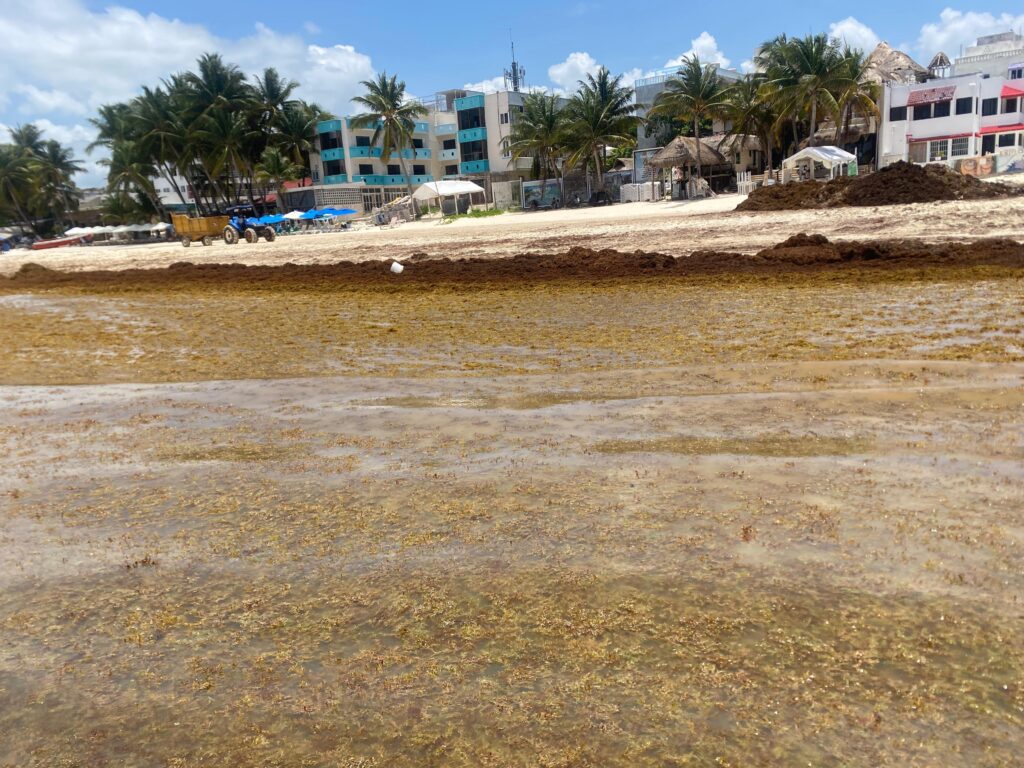
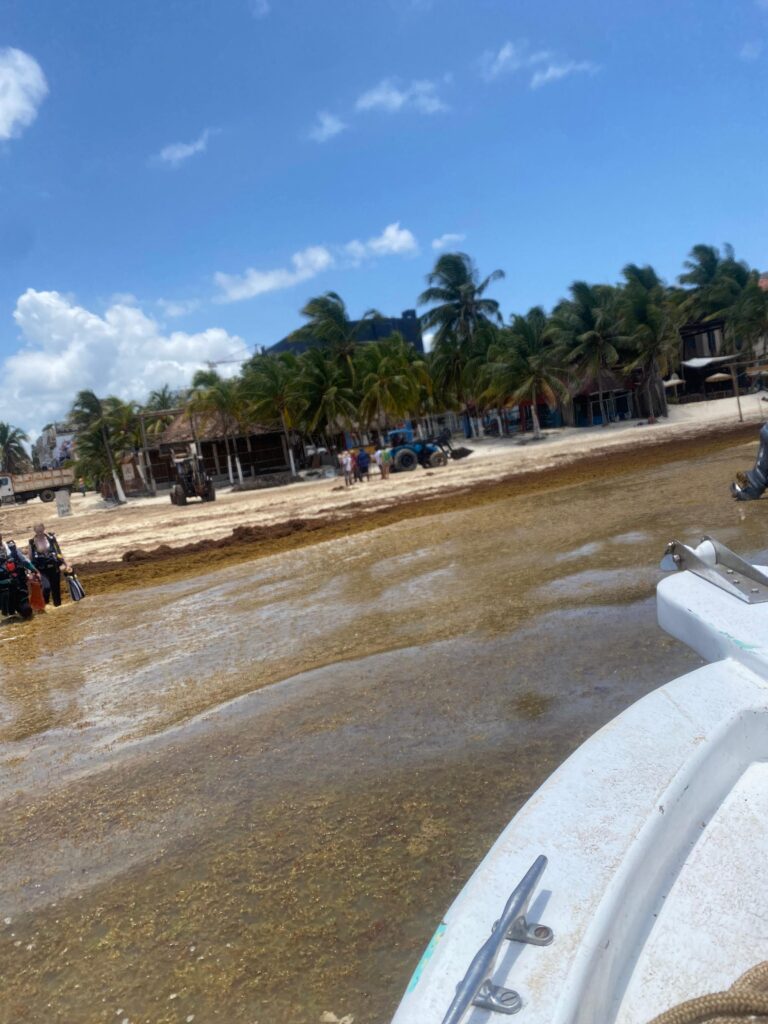
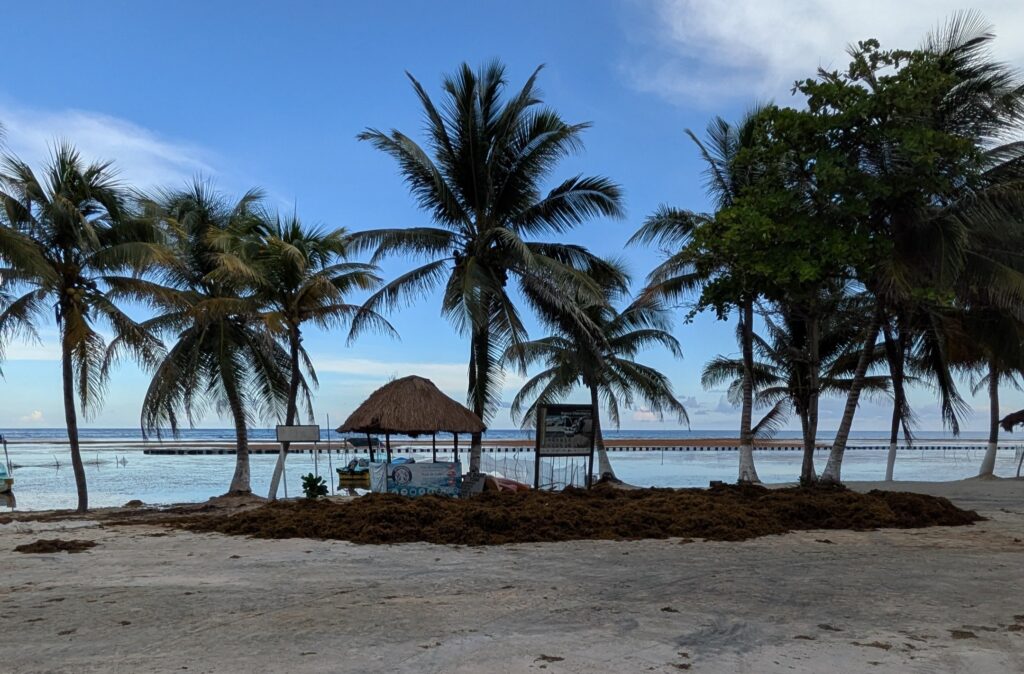
It’s now June 2026, and I’m living in Playa del Carmen. This year, the sargassum has felt relentless. The normally white-sand beaches are covered, the water is brown near the edge, and the smell is impossible to ignore. Even living 7 blocks from the beach, I can smell it from my front door.
Like most things, sargassum is not necessarily bad; it’s just misplaced and overgrown.
Out in the open ocean, sargassum is an important floating habitat for fish, turtles, crabs, and other marine life. But when huge amounts wash ashore and start decomposing on beaches, it becomes a serious problem for travellers, local communities, coastal ecosystems, and the tourism industry.
So, what is sargassum actually? Where does it come from? Why is it here in the Mexican Caribbean? And what can you do if you are planning a trip to Cancun, Playa del Carmen, or the Riviera Maya?
What Is Sargassum?
Sargassum is a type of brown seaweed that floats on the surface of the ocean.
Unlike many seaweeds that attach to rocks or reefs, the species affecting the Caribbean are free-floating. They drift with currents and winds, forming large mats on the ocean surface.
In the open ocean, this is not automatically a problem. Floating sargassum can create a mini-ecosystem, providing shelter and food for juvenile fish, sea turtles, crabs, shrimp, and other animals.
The problem begins when unusually large amounts of sargassum are pushed toward shore.
Once it piles up on beaches, it starts to rot. That is when it can smell like rotten eggs, turn the water brown, affect swimming conditions, and create problems for both people and ecosystems.
Where Does Sargassum in the Riviera Maya Come From?
For a long time, many people associated sargassum with the Sargasso Sea in the North Atlantic.
But the massive sargassum events affecting the Caribbean today are now linked to the Great Atlantic Sargassum Belt, a huge recurring bloom that can stretch across the tropical Atlantic from West Africa toward Brasil, the Caribbean and the Gulf of Mexico.
This belt has been observed regularly since 2011.
From there, winds and currents can carry sargassum into the Caribbean Sea, where it eventually reaches coastlines like Cancun, Playa del Carmen, Tulum, Akumal, Puerto Morelos, Mahahual, and other parts of Quintana Roo.
This is why sargassum is not just a “dirty beach” problem. It is a basin-wide ocean issue.
Why Is Sargassum Getting Worse?
Large sargassum blooms are a newer problem in the Caribbean.
Sargassum has always existed in the Atlantic Ocean, but the huge amounts washing onto Caribbean beaches today became prominent in 2011. That year, large blooms arrived on beaches across the eastern Caribbean. Scientists later connected these events to a new growth area in the tropical Atlantic, between West Africa and Brazil.
Before 2011, many Caribbean beaches rarely saw sargassum in these amounts. It was not a normal part of visiting places like Mexico, Belize, Honduras, or many Caribbean islands.
The problem seemed to disappear for a while, but it came back. In 2018, the Caribbean experienced another massive bloom. After that, large sargassum events became much more regular.
At first, it was mostly a spring and summer problem. Now, it is harder to predict. In places like Playa del Carmen, it can arrive earlier, last longer, and sometimes it feels like it never fully leaves.
2026 is predicted to be a El Niño year. El Niño does not directly cause sargassum, but warmer ocean conditions can add stress to marine systems and help create conditions where blooms can grow.
Scientists are still studying the exact causes for the bloombs but we still don’t know for sure.
The best explanation is that several things are working together: warmer water, changing winds and currents, river runoff, pollution, wastewater, deforestation, Saharan dust, and nutrients rising from deep water.
Sargassum grows when it has sunlight, warm water, and nutrients.
Once it grows, wind and currents decide where it goes. That is why one beach can be covered, while another nearby beach looks clear on the same day.
Is Sargassum Usually Here All Year?
Historically, sargassum in the Mexican Caribbean has been a seasonal issue, usually worse during the warmer months.
Lately, it has become more persistent and less predictable.
That does not mean every beach is covered every day.
But it does mean travellers should stop thinking of sargassum as a rare surprise and start treating it as a normal planning factor when visiting Cancun, Playa del Carmen, Tulum, or the Riviera Maya, or even Roatan & Belize.
Is Sargassum Dangerous?
Fresh sargassum floating in the ocean is not usually the main concern.
The problem is decomposing sargassum on the beach.
As it breaks down, sargassum can release gases like hydrogen sulphide and ammonia. Hydrogen sulphide is the gas responsible for the strong rotten-egg smell.
For many healthy adults, brief exposure may just be unpleasant. But for some people, it can cause headaches, nausea, eye irritation, throat irritation, coughing, or breathing discomfort.
People with asthma, respiratory conditions, heart conditions, young children, older adults, and pregnant travellers may want to be more cautious around large piles of decomposing sargassum.
You should also avoid handling sargassum with bare hands. It can trap small marine animals, sharp debris, bacteria, and other irritants.
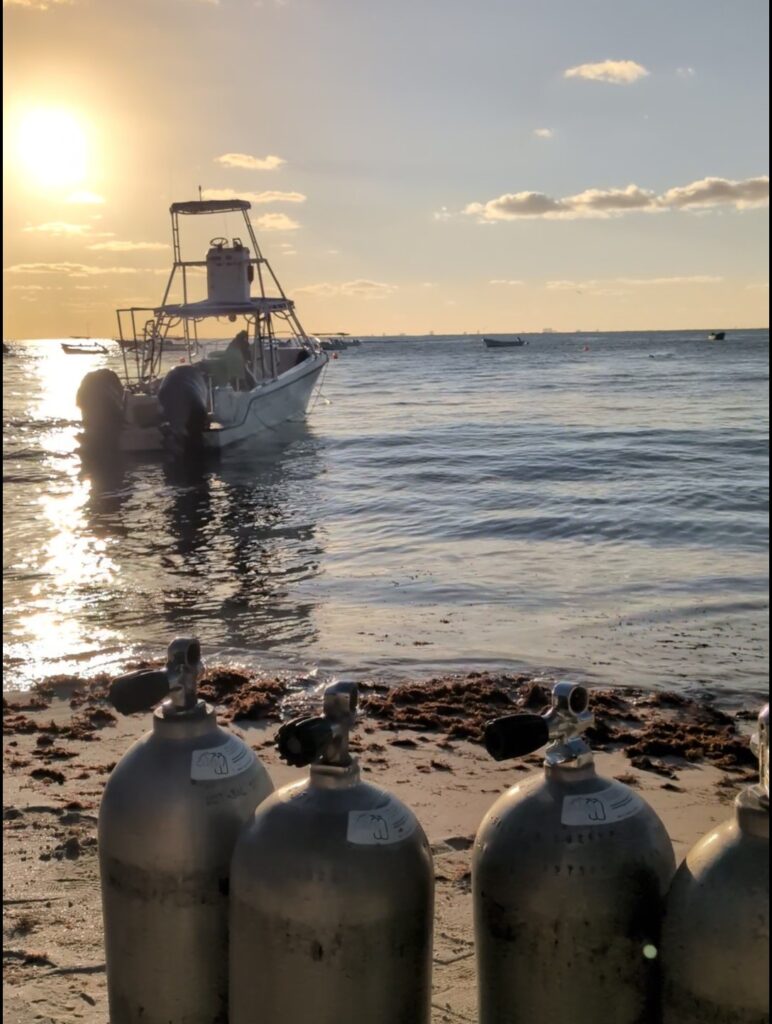
As a diver, I also notice how harsh the conditions can be on gear. When I dive near heavy sargassum, my double-enders, reel, and even stainless steel D-rings can tarnish. After diving in these conditions, I deep-clean my gear and scrub the metal pieces.
I have also had stainless steel jewellery tarnish from the humidity and gases near heavy sargassum, even without direct contact with the water.
How Sargassum Affects Marine Ecosystems
This is where the issue becomes complicated.
Offshore sargassum can be incredibly valuable. It creates habitat in the open ocean and supports many species.
But when huge volumes enter shallow coastal areas, it becomes harmful.
Large mats block sunlight from reaching seagrass beds and coral reefs. When the seaweed decomposes, it lowers oxygen levels in the water. This can stress or kill marine life, especially in shallow or enclosed areas.
Sargassum can also affect sea turtle nesting. Thick piles on the beach can make it harder for turtles to reach nesting areas and harder for hatchlings to reach the ocean.
In a healthy amount, sargassum is part of nature. In massive amounts, it overwhelms the system.
Can Hotels and Cities Clean Up Sargassum?
Yes and no.
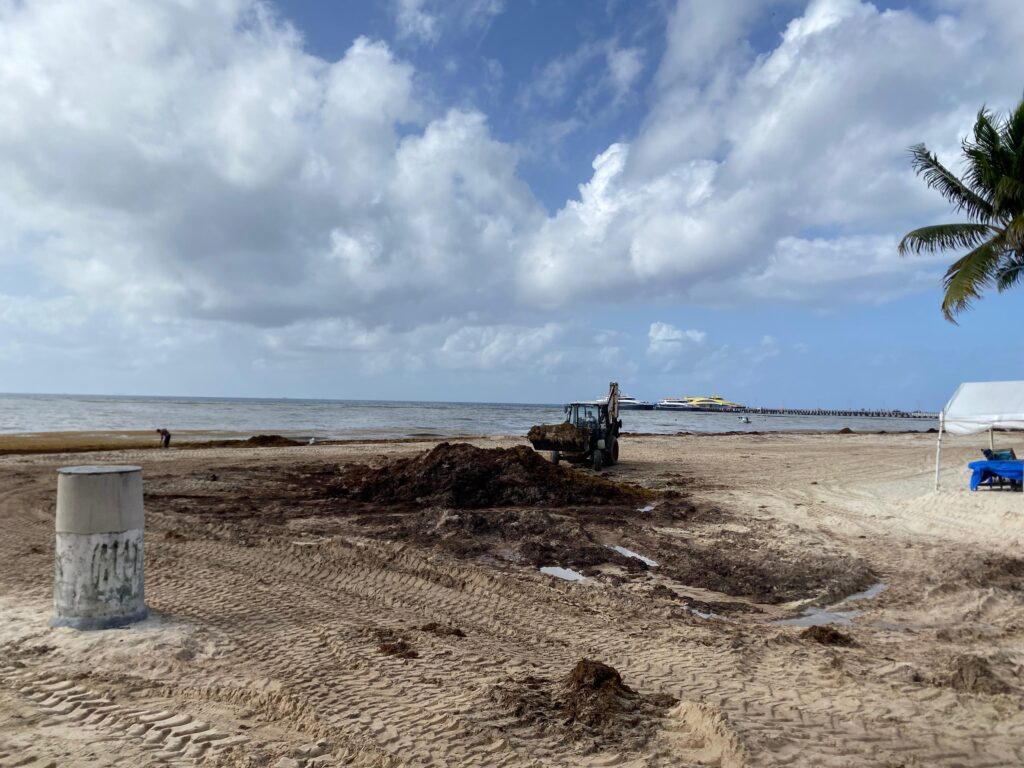
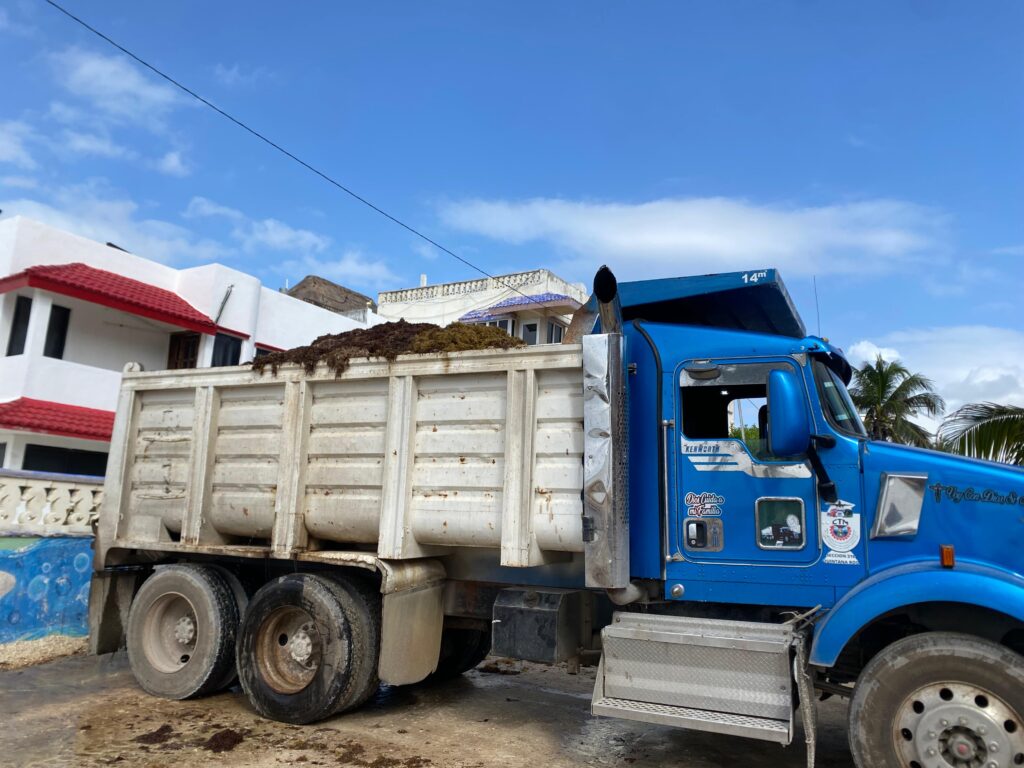
Many hotels and municipalities in Quintana Roo work hard to remove sargassum from beaches. Some use beach tractors, barriers, boats, and manual cleanup crews.
But this is expensive, labour-intensive, and imperfect.
Removing sargassum after it lands on the beach can also remove sand, disturb nesting areas, damage beach structure, and create disposal problems.
Sargassum can contain salt, heavy metals, plastics, and organic contaminants, which makes reuse more complicated than simply turning it into fertilizer.
Some areas use offshore barriers to try to stop sargassum before it reaches the beach. These can help in certain places, but they need to be carefully designed and maintained so they do not create problems for marine life or boat traffic.
Collecting sargassum before it reaches shore may be one of the better options, but it is still difficult, expensive, and not always realistic at the scale needed.
Some projects are also looking at ways to turn sargassum into biofuel, construction materials, compost, or other products, but large-scale solutions are still challenging.
Should You Still Visit Cancun, Playa del Carmen, or Tulum During Sargassum Season?
Yes, but with realistic expectations.
The Riviera Maya is still beautiful. There is so much to do here. Visit the cenotes, restaurants, ruins, jungle activities, diving, and snorkelling. There is so much more to do beyond lying on the sand.
But if your entire vacation dream depends on perfect white sand and clear turquoise water every single day, you may want to look outside the Caribbean in sargassum season.
Before booking, check recent beach reports, look at current photos, and understand that conditions can change quickly.
If beach quality is your top priority, you may want to choose a hotel with a strong beach-cleaning program, consider areas that are often less affected, or choose a different coast of Mexico altogether.
Places in Mexico That Don’t Have Sargassum
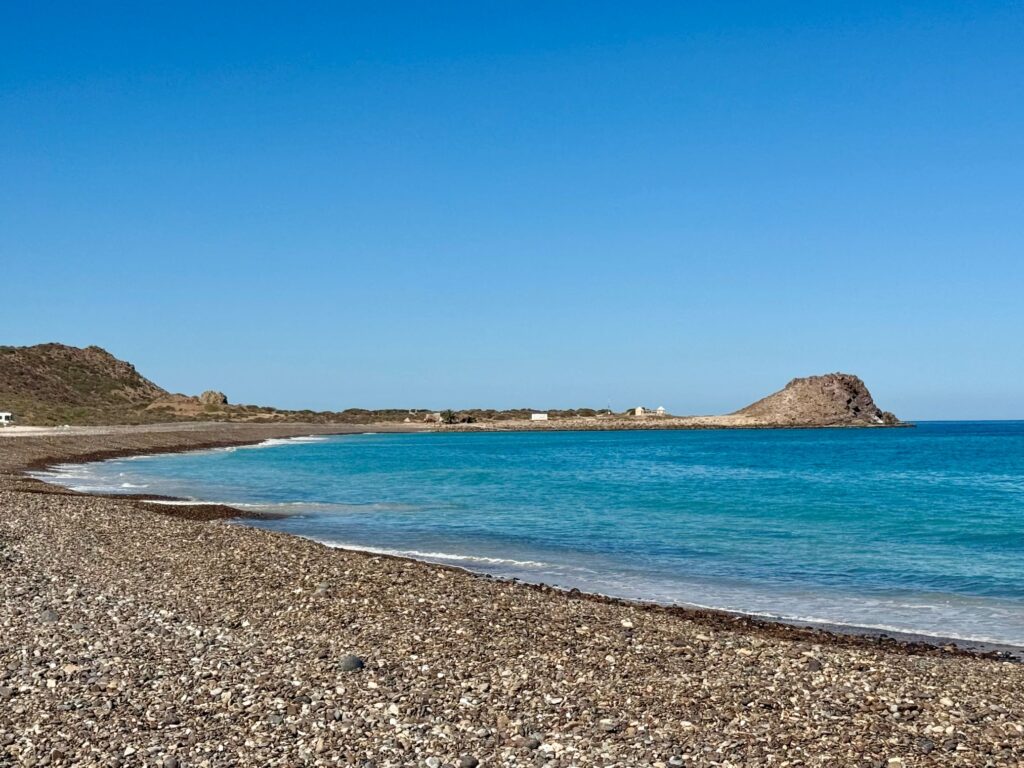
The good news is that sargassum is only a problem on the Caribbean-facing coast.
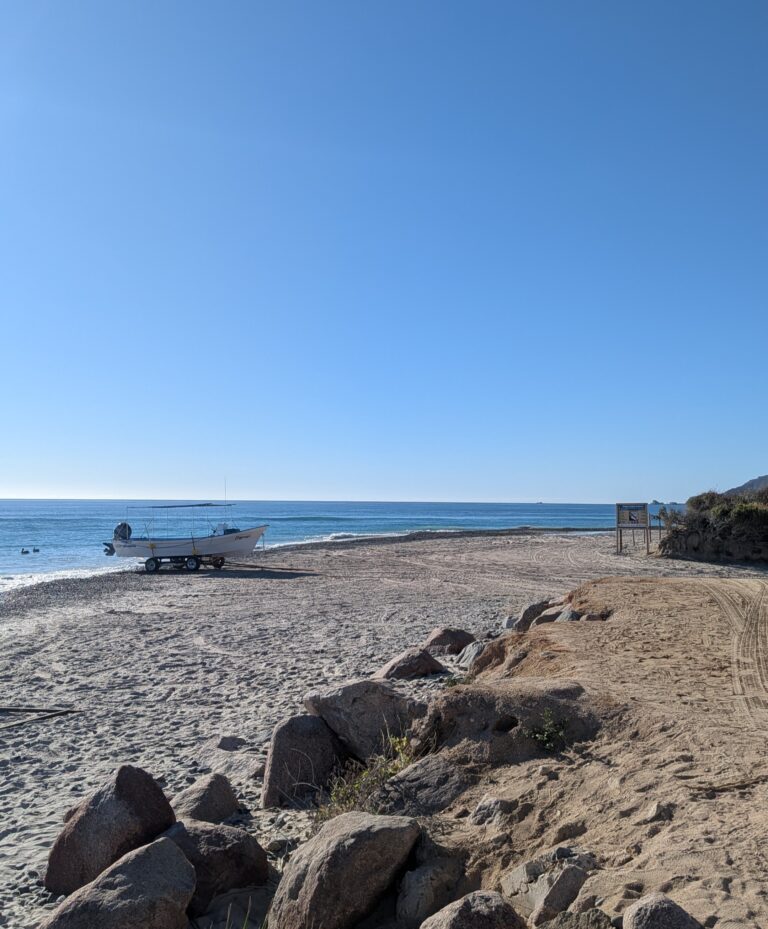
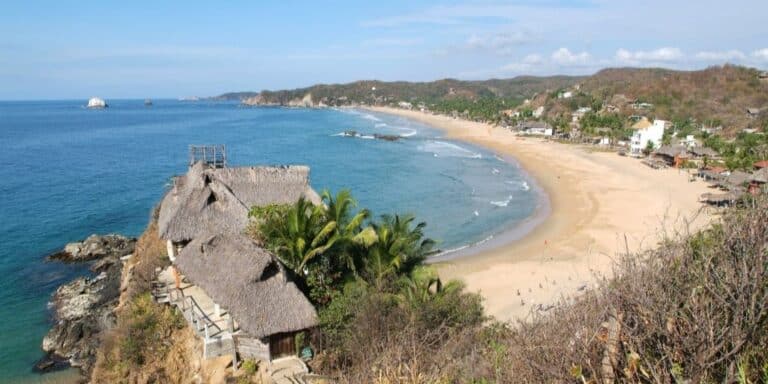
If you want a Mexican beach trip without worrying about sargassum, check out the Pacific side! I LOVE the Mexican Pacific, here are some of my favourite beach destinations without sargassum:
- Huatulco, Oaxaca
- Puerto Escondido, Oaxaca
- Zihuatanejo, Guerrero
- Cerritos, Baja California Sur
- Los Cabos, Baja California Sur
- Puerto Vallarta, Jalisco
These destinations have different beach conditions, seasons, waves, wildlife, and travel styles, but they do not experience the sargassum problem.
If you’re set on the Caribbean, you can also consider places that are often less affected. In Mexico in 2026 Isla Mujeres, Costa Mujeres, and the west side of Cozumel don’t have much sargassum. The island of Roatan, Honduras, also rarely experiences it. However, these are not guaranteed to be sargassum-free, so always check before booking.
Shev’s Summary – is visiting the Riviera Maya worth it in sargassum season?
I love living in Playa del Carmen, but the sargassum has been one of the hardest parts of being here.
It changes the beach experience. The smell can be overwhelming, and of course, I love to be in the water and this affects my ability to swim. It also affects local workers, businesses, marine ecosystems, and the overall feeling of the coastline.
At the same time, I do not think the answer is to panic or write off the Riviera Maya completely.
You just need to understand what is happening, plan around it, and be honest with travellers.
Sargassum is not just seaweed. It is a visible sign of how connected our oceans, rivers, climate, coastlines, and travel choices really are.
If you are planning a trip to Cancun, Playa del Carmen, Tulum, or anywhere in the Riviera Maya, check current conditions, keep your plans flexible, and consider adding cenotes, islands, diving, food tours, ruins, and inland adventures to your itinerary.
The beach may not always be perfect. But with adjusted expectations, the Mexican Caribbean can still be an incredible place to visit.